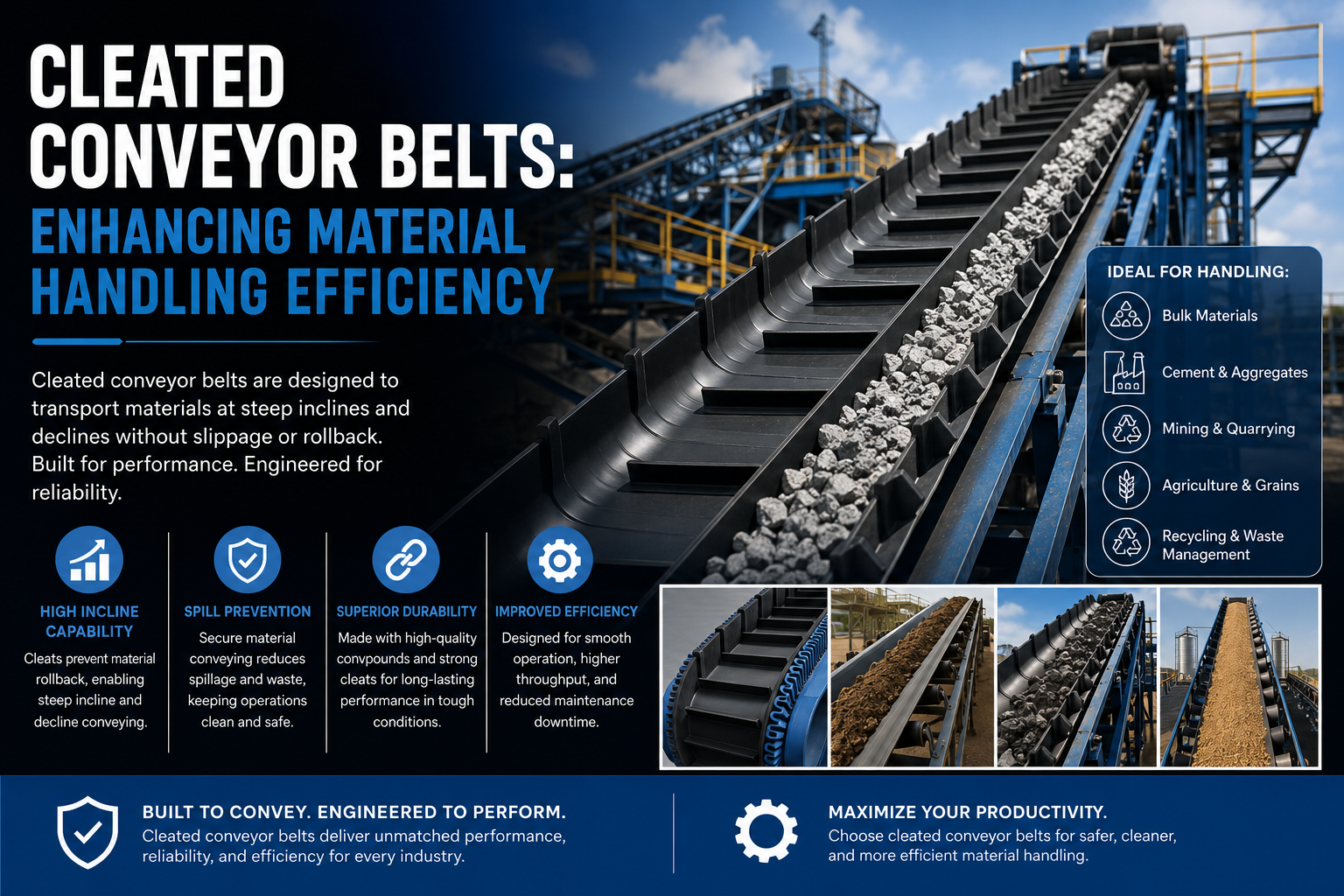
Applications of Cleated Conveyor Belts
A Comprehensive Guide of conveyor belt delves into the essential types of conveyor systems, highlighting their designs, operational functions, and best practices for effective selection and maintenance. Industries employ cleated conveyor belts as versatile tools, each leveraging their unique design to enhance material handling processes. One prominent application is in the food processing industry, where these belts transport ingredients and finished products. The cleats prevent food items from slipping, especially on inclined surfaces, ensuring a smooth and efficient flow. This application is critical for maintaining hygiene standards, as these belts can be constructed from food-grade materials that are easy to clean and resistant to contaminants. Similarly, in the packaging sector, cleated conveyor belts are essential for moving boxed or bagged products through various stages of packaging and distribution, maintaining organization and efficiency.
In manufacturing environments, cleated conveyor belts are frequently used to transport components and raw materials. Industries like automotive and electronics rely on these belts to move parts along assembly lines efficiently. Customizing cleats for specific parts ensures items remain secure during transport, minimizing damage risk and ensuring timely assembly. In mining and aggregate sectors, cleated belts are invaluable for transporting bulk materials like ores and gravel. Their robust construction allows them to handle heavy loads while maintaining reliability and safety in demanding environments.
Another significant application is in the recycling industry, where cleated conveyor belts facilitate the movement of materials through sorting and processing stages. By preventing spillage and ensuring that recyclable materials remain in place, these belts improve the efficiency of sorting operations. Similarly, in logistics and warehousing, cleated conveyor belts help optimize storage and retrieval processes, allowing for effective handling of goods in environments where space is at a premium. Their ability to transport materials both horizontally and vertically makes them a valuable asset for maximizing warehouse layouts.
The pharmaceutical industry uses cleated conveyor belts to move products through production lines safely and efficiently. These belts’ design allows precise control of material flow, essential in environments where accuracy is paramount. Overall, the applications of cleated conveyor belts are diverse and integral to various sectors and industries. As technology advances, these belts continue to evolve, providing innovative solutions tailored to meet the specific demands of each application.
Selecting the Right Cleated Conveyor Belt
Choosing the right cleated conveyor belt is crucial for optimizing material handling processes in any industrial setting. The selection process involves several key considerations that ensure the belt meets the specific needs of the application while delivering maximum efficiency and safety. One of the first factors to consider is the type of materials being transported. Different industries have varying requirements based on the characteristics of the materials, such as weight, size, and fragility. For instance, when handling bulk materials like gravel or sand, a belt with robust cleats and a durable construction is essential to withstand heavy loads and rough conditions. Conversely, in the food processing sector, selecting belts made from food-grade materials that meet hygiene standards is paramount.
Another important aspect to consider is the incline or decline angle at which the belt will operate. Design cleated conveyor belts to handle specific incline angles, making it vital to evaluate the maximum angle needed for your application. Appropriately design and space the cleats to prevent materials from slipping or falling off during transport, especially on steep inclines. Tailor the spacing and height of the cleats to the size and shape of the items being conveyed. Use wider cleats for larger, bulkier items and narrower cleats for smaller components to maintain efficiency and safety.
The operating environment also plays a significant role in belt selection. Factors such as temperature, exposure to chemicals, and moisture levels can affect the performance and longevity of the conveyor belt. Flexibility in belt design is crucial for frequent direction or elevation changes without compromising performance.
Choosing a cleated conveyor belt that is easy to maintain can lead to lower long-term operational costs. Features that facilitate cleaning, inspection, and replacement are beneficial, especially in industries where downtime can be costly. Lastly, consulting with manufacturers or suppliers who specialize in conveyor systems can provide valuable insights. They can offer recommendations based on their expertise and experience, ensuring that the selected cleated conveyor belt aligns with the operational goals of the business. By considering these factors, organizations can make informed decisions that enhance efficiency, safety, and productivity in their material handling processes.
Maintenance Tips for Cleated Conveyor Belts
Proper maintenance of cleated conveyor belts is essential for ensuring their longevity and optimal performance. Regular upkeep not only enhances operational efficiency but also reduces the risk of unexpected breakdowns, which can lead to costly downtime. Here are some key maintenance tips to keep cleated conveyor belts in excellent condition:
Conduct routine inspections to check for signs of wear and tear on the belt and cleats. Look for frayed edges, cracks, or loose cleats, as these issues can compromise the belt’s performance. Regular inspections must examine belt alignment and tension to prevent misalignment, reducing wear and improving efficiency. Keep the conveyor belts clean to prevent the buildup of debris, dust, or materials. Use appropriate cleaning solutions and methods that do not damage the belt material. Regular cleaning maintains hygiene standards, especially in food processing and pharmaceutical industries, ensuring product safety and compliance. Cleaning also prolongs the life of the belt by preventing abrasion and corrosion, reducing maintenance costs and downtime. Ensure that all moving components, including rollers and pulleys, are adequately lubricated. Proper lubrication reduces friction, minimizes wear, and ensures smooth operation. Regularly check lubrication levels and apply the specified lubricant to prevent overheating and excessive friction issues.
Maintaining the correct tension on the conveyor belt is crucial for its efficient operation. Too much tension can lead to premature wear, while too little tension can cause slippage. Regularly check the tension settings and adjust them according to the manufacturer’s guidelines. Over time, cleats can wear down or become damaged, which may affect the belt’s ability to grip materials effectively. Regularly inspect the cleats for signs of wear and replace them as needed. Having spare cleats on hand can help minimize downtime during replacements, allowing for quick and efficient repairs. Check the conveyor system for any obstructions that could impede the belt’s movement. Foreign objects can cause significant damage to both the belt and the materials being transported. Implement a protocol for promptly removing any obstructions to maintain smooth operation.
Be mindful of the temperature in the environment where the conveyor operates. Extreme heat or cold can affect the materials used in the belt, leading to premature degradation. If the conveyor operates in extreme conditions, consider using belts specifically designed to withstand such environments. Ensure that all operators are trained on the proper use and maintenance of cleated conveyor belts. Understanding how to operate the system correctly can prevent unnecessary wear and damage.
Operators should be aware of the signs of potential issues and know how to perform basic maintenance checks. Develop a comprehensive maintenance schedule that includes regular inspections, cleaning, and part replacements. Maintaining a log tracks belt condition and repair frequency, helping identify patterns needing attention or action. Always refer to the manufacturer’s guidelines for maintenance recommendations tailored to your specific cleated conveyor belt. These guidelines offer valuable insights on best practices for care and maintenance, ensuring peak equipment performance.
By following these maintenance tips, organizations can enhance the efficiency and lifespan of their cleated conveyor belts. Regular upkeep contributes to a safer work environment, ultimately leading to improved productivity and reduced operational costs.
Conclusion
In industrial manufacturing, cleated conveyor belts enhance operational efficiency in a fast-evolving material handling landscape. Their unique design, featuring raised cleats, provides distinct advantages that cater to the specific needs of various industries. By facilitating the transport of materials at both horizontal and inclined angles, these belts maximize the use of vertical space, leading to improved workflow.
The benefits of cleated conveyor belts extend beyond simple material movement. They play a critical role in enhancing safety standards within the workplace. By securely holding items in place during transit, cleated belts significantly reduce the risk of spills and accidents. This safety aspect protects workers, minimizes product loss, and is vital in precision-driven industries like food processing and pharmaceuticals.
Customization is another crucial advantage of cleated conveyor belts. The ability to tailor cleat design, spacing, and belt material allows businesses to optimize their systems for specific applications. This adaptability is valuable for industries with fluctuating product types and production volumes, helping organizations remain agile.
Regular maintenance further enhances the effectiveness of cleated conveyor belts. Routine inspections, cleaning, and timely repairs help businesses prolong the lifespan of their conveyor belts and reduce unexpected downtime risks. A proactive maintenance strategy saves costs related to replacements and fosters a culture of safety and responsibility within the organization.
As industries continue to seek ways to optimize processes, enhance productivity, cleated conveyor belts stand out as a key solution. Their ability to improve material handling efficiency makes them invaluable assets in a variety of sectors. By investing in high-quality cleated conveyor belts and adhering to best maintenance practices, organizations can maximize their operational capabilities.
In conclusion, cleated conveyor belts represent a powerful tool for enhancing material handling efficiency across diverse applications. Their design, coupled with the benefits of customization and safety, positions them as a critical element in modern industrial operations. By leveraging the advantages of cleated conveyor belts, businesses can streamline their processes, enhance productivity.
Frequently Asked Questions
What are cleated conveyor belts used for?
Cleated conveyor belts transport materials at various angles, preventing items from sliding off during movement.
How do I choose the right cleated conveyor belt?
Consider factors like the materials you are transporting and the incline angle.
What maintenance is required for cleated conveyor belts?
Regular inspections, cleaning, and monitoring tension and alignment are essential for maintaining performance.
Can cleated conveyor belts be customized?
Yes, Manufacturers can customize cleated conveyor belts to meet the specific requirements of different industries.
How do cleated conveyor belts enhance safety?
By securely holding items in place, cleated conveyor belts minimize the risk of spills and accidents.